Paid Sleep Services
Users subscribe to personalized wake-ups, AI sleep optimization, and long-term trend analysis, generating revenue from useful software services.
How many hours did you sleep last night?
Meet the MOMO Sleep team ↓Hover over a person, or tap on your phone, to meet the people building the sleep economy system.


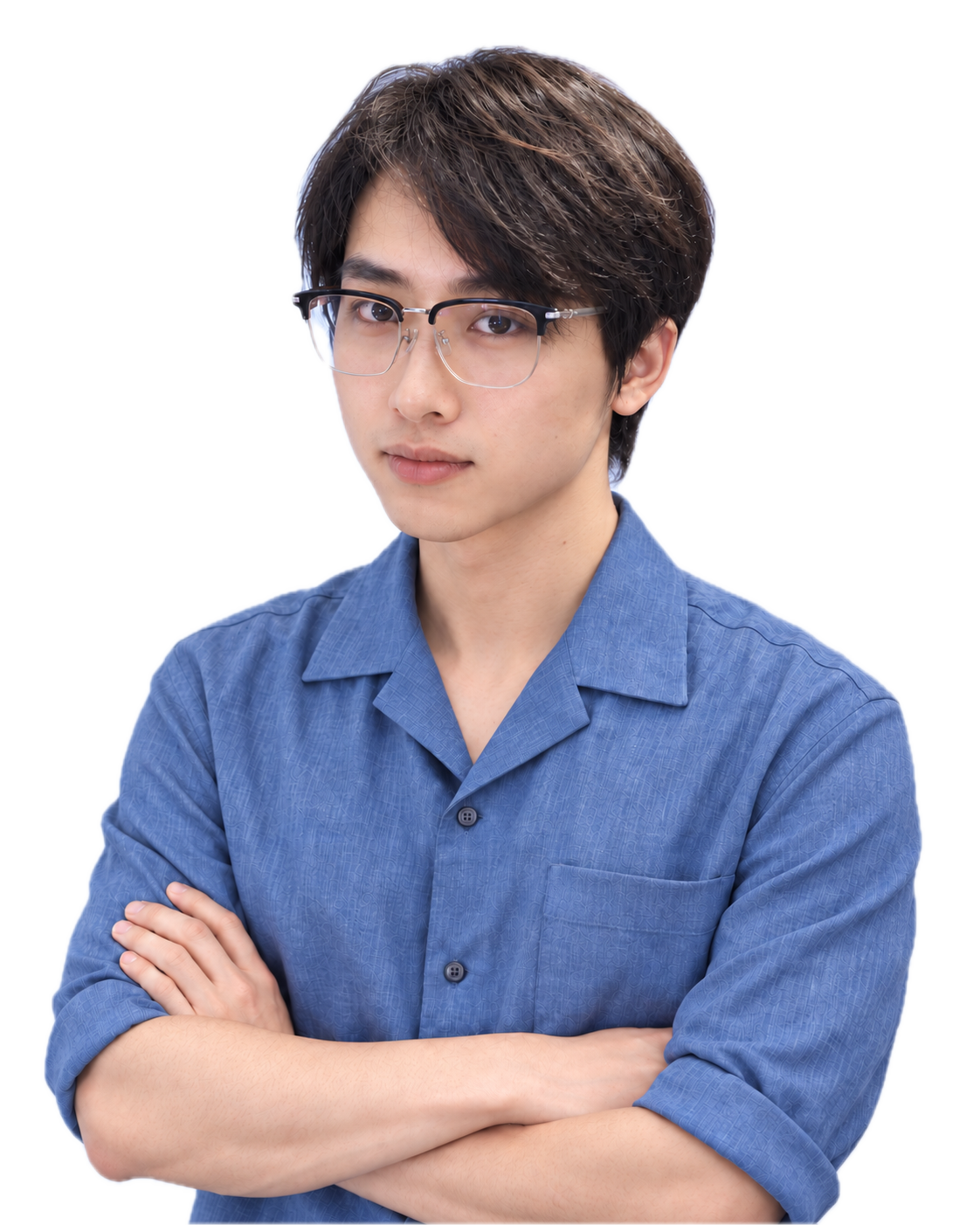
Project Lead
AI content creator focused on AI development, options, and Web3 trading.
Desktop: hover or use Tab to focus · Mobile: tap a team member
The MOMO sleep economy system connects smart wake-ups, wearable data, AI feedback, real-world product research, and privacy-preserving audits. The China version uses sponsor budgets and centralized points for settlement; the overseas version demonstrates minting eligible points into on-chain tokens.
This page does not connect to HealthKit or upload its data. Sample A is a sleep screenshot and manual summary explicitly authorized by the user for public display. The China version issues no tokens. The overseas section only mints Monad Testnet SLEEP demo tokens with no mainnet value, trading market, liquidity, or promised returns.
This demo scores a night of sleep across four factors: duration, depth, continuity, and regularity. The scoring rules are versioned: identical inputs produce identical results, and the server recalculates the score before writing it to the sandbox ledger.
Original screenshot shared with the user's permission: 07:36–15:13; Awake 31 minutes, REM 50 minutes, Light 250 minutes, and Deep 105 minutes. Hover over the four colored summary bars below the chart, or tap them on your phone, to see each algorithm and weight.
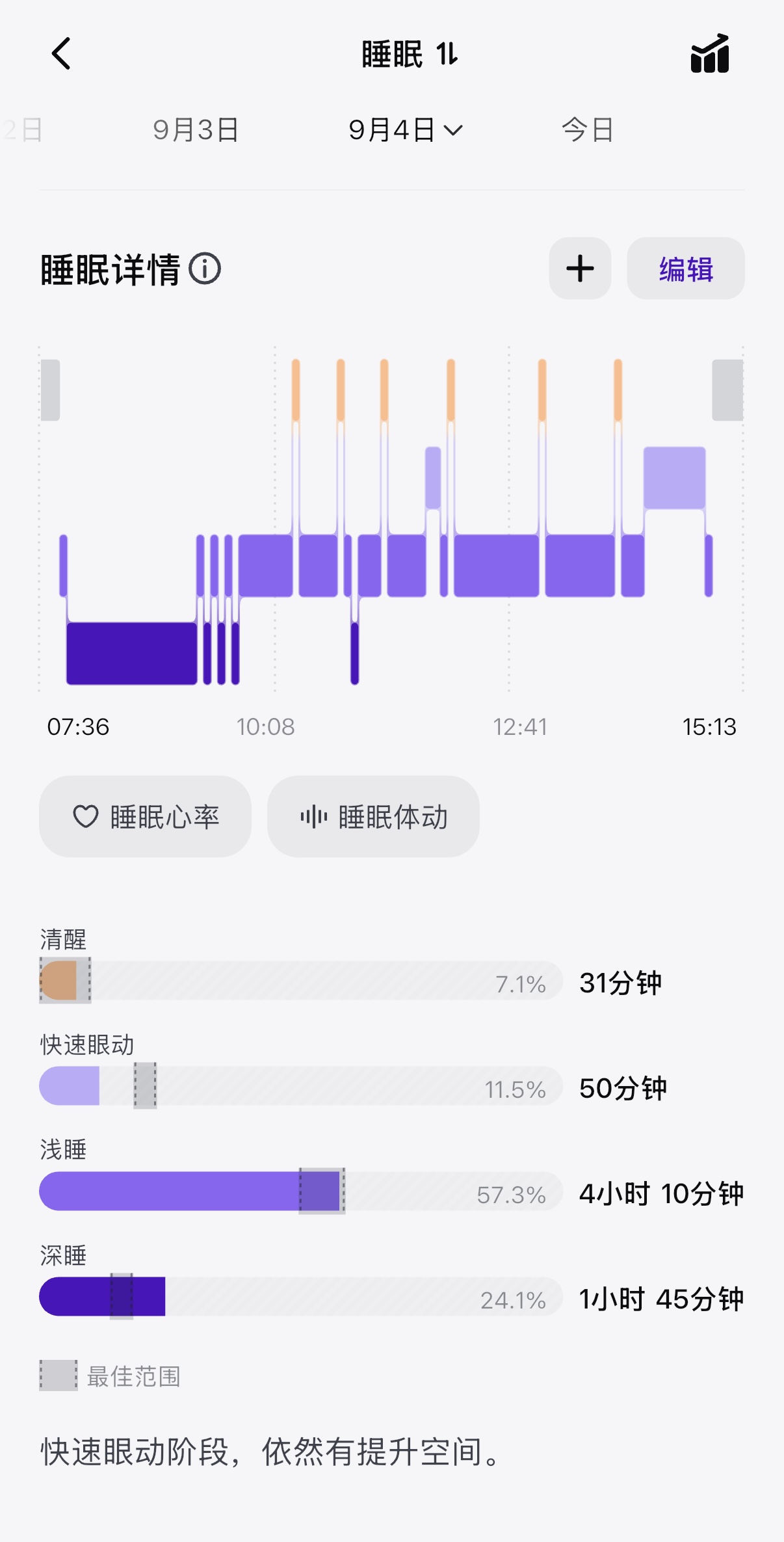
Original Chinese source image, reproduced without alteration. Selected date: September 4. Chart: 07:36–15:13.
Source interface: Sleep · Sleep details · Edit · Sleeping heart rate · Sleep movement · Optimal range · Today · September 3.
Source app comment: “There is still room for improvement in REM sleep.” This is the source app’s assessment. Its 24.1% Deep share includes awake time; MOMO’s scoring share is 25.9% of actual sleep.
Stage totals add up to 436 minutes, while the chart spans 457 minutes. The missing 21 minutes are neither filled in nor scored. The estimate of 6 interruptions comes from visible segments and awaits calibration against the original minute-by-minute export.
In the production model, a brand first funds the campaign budget, then the platform pays users for eligible points at the current redemption rate. The rate may change with sponsor budgets and campaign periods, but each request locks in the rate when submitted.
For production integration, use asynchronous corporate merchant transfers: initiate them on the server, check the final status, and show the user an electronic receipt. Health information and financial accounts are sensitive personal information; explain each purpose and obtain the required separate consent. References: WeChat Pay merchant transfer concepts, Personal Information Protection Law, Articles 28–30.
The overseas pathway maps sleep credentials that pass server-side scoring and risk checks to ERC-20 rewards. This demo's contract deployment, mint transactions, blocks, recipient addresses, and token balances can all be verified on Monad Testnet.
The public demo allows up to 20 mints, with one mint per sleep commitment and per recipient address, a maximum of 1,000 SLEEP per mint, and a hard contract-wide cap of 20,000 SLEEP. A production overseas product still requires reviews of securities, tax, consumer protection, privacy, sanctions, and smart-contract security for each target jurisdiction. Network reference: Monad Developer Portal.
Each sleep entry receives a different credential hash, transaction hash, and block height. This is a workflow simulation: it uses no test tokens and cannot be verified in a block explorer.
Each points purchase creates a distinct redemption credential, simulated transaction, and simulated block that persist after refresh. These demonstrate the audit workflow only; they are not actual testnet transactions.
The network and contract address stay fixed by design. Each actual anchoring changes the transaction, block, and batch root.
Value comes from real demand and payments outside the system.
Users, product makers, and research institutions pay for better sleep services, product insights, and research evidence. MOMO brings that external value into the system to fund operations and share an agreed portion with contributors.
If only you value your own sleep, how can that value circulate?
External buyers have a reason to pay when real sleep records help them make decisions.From product development to scientific research, continuous, trustworthy sleep data has potential practical value. MOMO connects user consent, data quality, and buyer needs so that value can be verified, purchased, and shared with participants.
Users subscribe to personalized wake-ups, AI sleep optimization, and long-term trend analysis, generating revenue from useful software services.
Connect users with pillows, mattresses, wearables, and other sleep products, earning fees and commissions through clearly labeled ads, referrals, and sales partnerships.
Manufacturers pay for detailed feedback from real-world use to improve products and market strategy. Deliverables are user-authorized, de-identified aggregate data and analysis.
Research institutions fund large-scale, longitudinal studies of real-world sleep, receiving datasets, controlled analyses, or research reports with separate participant consent.
Develop optional social matching, communities, and memberships around similar sleep schedules. Users choose to join; exact schedules and locations are hidden by default.
Equity funding or strategic investment supports R&D, market expansion, and pilot launches. Investment funds growth; ongoing operations still need real business revenue.
Imagine a pillow maker that wants to understand how its product performs in real bedrooms, improve its design, and identify whom it suits. It could fund a product study with MOMO.
Agree on the research question, eligibility, data scope, and participant rewards.
Use the product, record sleep and experiences before and after using it, and contribute honest feedback.
Check participation and data quality, apply privacy protections, analyze aggregate results, and handle settlement.
Users receive compensation for participating. The brand receives evidence for product and market decisions.
The brand's budget funds participant compensation, research delivery, and platform operations as agreed. The production payout model could pay users in CNY. Compensation rewards valid participation, regardless of higher sleep scores or positive reviews.
Comparable, verifiable answers to which products suit which people and what needs improvement, without unrestricted access to identities or raw health records.
Make real sleep records and valid participation contributions that can earn compensation.
Help funding, products, and trustworthy evidence flow through the sleep industry.
Sleep products are the entry point; real-world data and evidence services are the business foundation. MOMO explores turning sleep data into economic value and usable assets: with explicit consent and real demand, useful evidence can become a service that can be priced, delivered, and audited.
Explore China's sleep market and its growth ↓Business model plan and illustrative example: this demo has not yet validated these revenue streams or brand partnerships, and actual payouts are not enabled. Rewards are limited by dedicated funds already received and an agreed share of realized revenue. Raw health data stays off-chain.
Users buy NFT sneakers, exercise to earn GST, and spend GST on repairs, upgrades, and minting new sneakers. The concept was easy to understand and spread quickly, but rewards depended heavily on new users and transactions within the ecosystem.
These are estimates of active on-chain addresses, not total app users.
Another lesson from Lympo: The 2022 hot-wallet incident shows that key security and asset custody matter just as much.
Sources: STEPN Tokenomics, Binance Research 2022, Lympo incident update, Immunefi review.
USD 73 billion
Global sleep wellness spending in 2024
USD 103.5 → 136 billion
Sleep-aid technology forecast, 2025–2030
The two datasets use different definitions and cannot be added together.
Sources: iiMedia sleep economy research, GWI 2025, BCC Research.
It remains a small category, with clear growth over the past three years.
Sources: IDC China wrist-worn devices, Omdia smart rings.
A focus on sleep, the smart-hardware supply chain in Shenzhen and the Greater Bay Area, local demand for better sleep, and the option to deploy open-weight AI locally.
Actual supplier quotes and manufacturing yields, customer acquisition costs, usable-data rates, manufacturers' willingness to pay, and participants' willingness to return.
Insurance and health-management groups such as Taikang may be researched as potential partner categories, but this project currently has no investment, partnership, or endorsement relationship with them. The overlap of AI, health, wearables, and privacy-preserving computation does not automatically confer policy support; putting sleep data on-chain does not automatically make it a real-world asset (RWA).